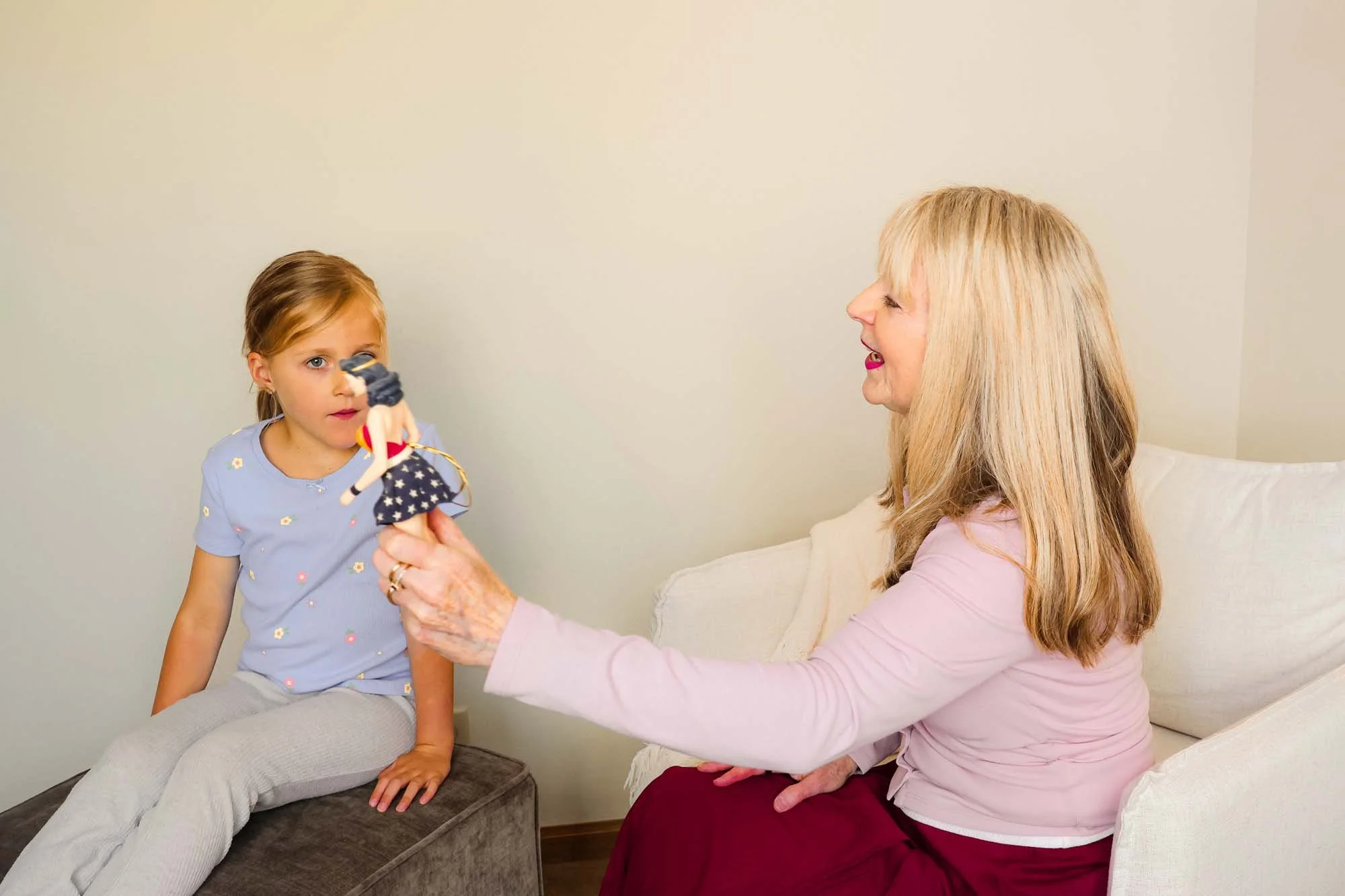

Attachment-Based EMDR Therapy with Kids & Families
IATP-C
The Integrative Attachment Trauma Protocol for Children and Adolescents
About Our IATP-C Training
Join us for a fun and playful two days and discover the EMDR Integrative Attachment Trauma Protocol for Children (IATP-C). The model is designed for kids and teens with tough histories and all the problems that go along with that – the social and emotional delays, the challenging behaviors, the mistrust, the avoidance. Kids removed from their bio homes benefit but also kids in bio homes impacted by generational trauma, early medical trauma, separations, parent mental illness, or parent substance abuse.
Includes:
Attachment Resource Development (ARD)
Self-Regulation Development and Installation (S-RDI)
EMDR for compulsive behaviors
The Trigger Tolerance Protocol
The EMD continuum triggers & traumas
Stories for the most heartbreaking histories
Modifications for substance exposure in utero, neurodivergence, and dissociation
You’ll develop skills for applying all 3 stages:
Stage 1) parent psychoeducation and case conceptualization.
Stage 2) EMDR and family therapy activities with kids and parents to build trust, calm dysregulation, and build good feelings.
Stage 3) EMDR modifications for gentle processing of triggers and traumas with complex kids, as well as making sense of the most difficult histories through therapeutic stories.
Choose Your Location
We’re always adding to our Trainings. Please check back or sign up for our newsletter for the latest trainings, with new dates & locations!
September 23-24, 2026
Charlottesville, Virginia


Instructors:
Debra Wesselmann, MS, LIMHP
Lindy Swimm, MAE, MSW, LCSW-S
February 11-12, 2027
Virtual Training

Instructors:
Debra Wesselmann, MS, LIMHP
Christine Mark-Griffin, LCSW
October 2-3, 2026
Colorado Springs, Colorado
Instructors:
Debra Wesselmann, MS, LIMHP
Renée Yoelin-Allen LCSW RPT-S
April 8-9, 2027
Virtual Training
Instructors:
Debra Wesselmann, MS, LIMHP
Christine Mark-Griffin, LCSW
In-Person Training
September 23-24, 2026
Charlottesville, Virginia
Attachment-Based EMDR Therapy with Kids and Families: The Integrative Attachment Trauma Protocol for Children and Adolescents (IATP-C)
Mistrust of adults, behavioral challenges, dissociation, avoidance, and developmental deficits can present obstacles to effective treatment in the therapy office. This presentation provides instruction in the steps of the EMDR Integrative Attachment Trauma Protocol for Children (IATP-C). A case series study here and in the Netherlands as well as single case studies here and in New Zealand have shown promising results for the IATP-C approach.Participants will gain EMDR and family therapy skills for improving attachment security between parents and kids as well as making sense of the most difficult histories through therapeutic stories. Participants will gain skills for providing parent interactional interweaves, the art of EMDR “piecework,” and how to engage parents for stabilizing dissociation. Additionally, participants will be provided EMDR modifications that safely assist children and teens who are highly dissociative, neurodivergent, or impacted by prenatal substance exposure through trauma treatment.
The presentation incorporates discussion, videos, and practicum experiences that will allow you to become comfortable with applying these effective interventions
The Objectives
Participants will leave the training prepared to:
Summarize the obstacles to recovery from trauma encountered in the treatment of children affected by attachment trauma.
Describe 3 stages of the EMDR and family therapy integrative model for treating children with externalizing and internalizing symptoms related to attachment trauma.
Describe the importance of play and a playful demeanor to minimize defenses and engage children and their caregivers during the preparation and stabilization phase of treatment for attachment trauma.
Describe steps for EMDR resource development with children/teens to enhance capacity to access positive affect regarding self and relationship with caregivers.
Explain the adaptive information processing theory in layman’s language that can be used to help parents recognize their child’s dysregulation and mistrust as driven by early traumatic experiences.
Develop a therapeutic story that can provide needed adaptive information regarding difficult early experiences prior to reprocessing of individual traumatic events.
Explain ways in which traumatized children with brain differences due to a history of prenatal substance exposure or neurodivergence can be appropriately supported and assisted by the therapist and parent throughout the therapeutic process.
Summarize signs and symptoms of dissociation in children/teens pointing to the need for additional preparation phase strategies.
The Instructors
Lindy Swimm, MAE, MSW, LCSW-S
Debra Wesselmann, MS, LIMHP
Pricing
$285 to Repeat
$360 by September 9th
$385 after September 9th
PLEASE NOTE:
Basic EMDR Training is required to register for this training event.
This is an in-person training in Charlottesville, VA.
Riverbend Counseling Group
172 South Pantops Road
Charlottesville, VA 22911
Location
CEs & Credits
12 EMDRIA Credits
Approval #01007-88
12 Licensure CEs
Additional Details
-
Debra Wesselmann, MS, LIMHP
Debra is the author of the newly released IATP-C clinician guide, EMDR and Family Therapy: Integrative Treatment for Attachment Trauma in Children and the soon-to-be released Attachment Trauma in Kids: Integrative Strategies for Parents. She is a co-founder of The Attachment and Trauma Center of Nebraska and has specialized in treating attachment trauma for 35 years. Debra is an EMDR trainer with the EMDR Institute and is on the editorial board for The Journal of EMDR Practice and Research. She conducts research and has authored and co-authored multiple books, articles and chapters, including two chapters co-authored with EMDR founder Francine Shapiro, Ph.D. As a recognized expert in attachment issues, Debra presents nationally and internationally.
Lindy Swimm MAE, MSW, LCSW-S
Lindy is an EMDRIA Certified Consultant, Integrative Attachment Trauma Protocol for Children (IATP-C) Certification, Assisting Faculty for EMDRIA Approved Trainers, and TraumaPlay™ Certified Supervisor. Lindy specializes in attachment-based trauma treatment with children and families. She integrates EMDR, play, expressive interventions, and caregiver involvement to support regulation, trust, and healing for children with complex trauma histories.
-
Participants are required to attend the training in full, to receive CEs and EMDRIA credits.
-
100% refund by September 16th.
50% refund or credit towards a future training by September 20th.
Any cancellations after September 20th will be a credit towards a future training.
Questions?
Contact Angi at angi.decapp@gmail.com
-
Schedule is in Eastern Daylight Time (EDT)
12:30-1:15
Diving into problematic attachment patterns
1:15-2:15
The basics of the IATP-C
Stage One Parent Psychoeducation and Case Conceptualization
Q & A
2:15-2:30 BREAK
2:30-4:15
Stage Two Family Therapy Activities
Q & A
4:15-4:30 BREAK
4:30-6:30
Foundational EMDR resourcing activities
Attachment Resource Development (ARD) Activities
Self-regulation Development and Installation (S-RDI)
6:30-7:00
Q&A
-
Schedule is in Eastern Daylight Time (EDT)
9:00-10:15
Moving into Phase 3 Family Therapy and EMDR Trigger Tolerance Protocol
10:15-10:30 BREAK
10:30-12:00
The Timeline and Therapeutic Stories
Q&A
12:00-1:15 LUNCH
1:15-2:45
Trauma work
Keeping parents present
Beginning EMDR phases 3-8 with support and safety, piecework, interactive interweaves
2:45-3:00 BREAK
3:00-4:30
Strategies and parent work to reduce dissociative symptoms in kids
Modifications to improve outcomes treating trauma for kids with neurodivergence and prenatal substance exposure
4:30-4:45
Q&A
In-Person Training
October 2-3, 2026
Colorado Springs, Colorado
Attachment-Based EMDR Therapy with Kids and Families: The Integrative Attachment Trauma Protocol for Children and Adolescents (IATP-C)
Mistrust of adults, behavioral challenges, dissociation, avoidance, and developmental deficits can present obstacles to effective treatment in the therapy office. This presentation provides instruction in the steps of the EMDR Integrative Attachment Trauma Protocol for Children (IATP-C). A case series study here and in the Netherlands as well as single case studies here and in New Zealand have shown promising results for the IATP-C approach.Participants will gain EMDR and family therapy skills for improving attachment security between parents and kids as well as making sense of the most difficult histories through therapeutic stories. Participants will gain skills for providing parent interactional interweaves, the art of EMDR “piecework,” and how to engage parents for stabilizing dissociation. Additionally, participants will be provided EMDR modifications that safely assist children and teens who are highly dissociative, neurodivergent, or impacted by prenatal substance exposure through trauma treatment.
The presentation incorporates discussion, videos, and practicum experiences that will allow you to become comfortable with applying these effective interventions
The Objectives
Participants will leave the training prepared to:
Summarize the obstacles to recovery from trauma encountered in the treatment of children affected by attachment trauma.
Describe 3 stages of the EMDR and family therapy integrative model for treating children with externalizing and internalizing symptoms related to attachment trauma.
Describe the importance of play and a playful demeanor to minimize defenses and engage children and their caregivers during the preparation and stabilization phase of treatment for attachment trauma.
Describe steps for EMDR resource development with children/teens to enhance capacity to access positive affect regarding self and relationship with caregivers.
Explain the adaptive information processing theory in layman’s language that can be used to help parents recognize their child’s dysregulation and mistrust as driven by early traumatic experiences.
Develop a therapeutic story that can provide needed adaptive information regarding difficult early experiences prior to reprocessing of individual traumatic events.
Explain ways in which traumatized children with brain differences due to a history of prenatal substance exposure or neurodivergence can be appropriately supported and assisted by the therapist and parent throughout the therapeutic process.
Summarize signs and symptoms of dissociation in children/teens pointing to the need for additional preparation phase strategies.
The Instructors
Debra Wesselmann, MS, LIMHP
Renée Yoelin-Allen LCSW RPT-S
Pricing
$285** to Repeat
$360 by September 18th
$385 after September 18th
**The repeat pricing only applies if you have taken the EMDR Kids & Family Training previously with the ATC Institute (Armstrong, Schweitzer, Wesselmann)
PLEASE NOTE:
Basic EMDR Training is required to register for this training event.
Location
This is an in-person training in Colorado Springs, CO.
COS City Hub
4304 Austin Bluffs Pkwy.
Colorado Springs, CO 80918
CE’s & Credits
12 EMDRIA Credits
Approval #01007-89
12 Licensure CEs
Additional Details
-
Debra Wesselmann, MS, LIMHP
Debra is the author of the newly released IATP-C clinician guide, EMDR and Family Therapy: Integrative Treatment for Attachment Trauma in Children and the soon-to-be released Attachment Trauma in Kids: Integrative Strategies for Parents. She is a co-founder of The Attachment and Trauma Center of Nebraska and has specialized in treating attachment trauma for 35 years. Debra is an EMDR trainer with the EMDR Institute and is on the editorial board for The Journal of EMDR Practice and Research. She conducts research and has authored and co-authored multiple books, articles and chapters, including two chapters co-authored with EMDR founder Francine Shapiro, Ph.D. As a recognized expert in attachment issues, Debra presents nationally and internationally.
Renée Yoelin-Allen, LCSW, RPT-S has worked with children and families for more than 30 years. She has worked in a variety of clinical settings. She is a Registered Play Therapy Supervisor and a certified EMDR therapist and consultant. She has offered many professional trainings in Play Therapy and EMDR. She is committed to her own private practice serving adults, children and families, who are healing from the impacts of trauma. She offers clinical supervision for Play Therapy and consultation for EMDR to other clinicians looking to grow skills in these areas and is enthusiastic in helping clinicians learn in utilizing the two interventions together. She is a certified Safe and Sound provider, helping with nervous system regulation support. A native to Colorado, she loves hiking, camping, music, dancing and photography.
-
Participants are required to attend the training in full, to receive CEs and EMDRIA credits.
-
100% refund by September 25th.
50% refund or credit towards a future training by September 29th.
Any cancellations after September 29th will be a credit towards a future training.
QUESTIONS
Contact Angi at angi.decapp@gmail.com
-
Schedule is in Mountain Daylight Time (MDT)
9:00-10:15
Diving into problematic attachment patterns between parents and children
Q & A
10:15-10:30 BREAK
10:30-12:00
The basics of the integrative family therapy and EMDR therapy approach
Stage One Parent Psychoeducation and Case Conceptualization
Q & A
12:00-1:00 LUNCH
1:00-2:30
Stage Two Family Therapy Activities
Q & A
2:30-2:45 BREAK
2:45-4:00
Foundational EMDR resourcing activities
Attachment Resource Development (ARD) Activities
Self-regulation Development and Installation (S-RDI)
4-4:30
Q&A
-
Schedule is in Mountain Daylight Time (MDT)
9:00-10:15
Moving into Phase 3 Family Therapy and EMDR Trigger Tolerance Protocol
Transitioning into Timeline and Therapeutic Story
10:15-10:30 BREAK
10:30-12:00
The Timeline and Therapeutic Stories
12:00-1:00 LUNCH
1:00-2:30
Trauma work
Keeping parents present
Beginning EMDR phases 3-8 with support and safety, piecework, interactive interweaves
2:30-2:45 BREAK
2:45-4:00
Strategies and parent work to reduce dissociative symptoms in kids
Modifications to improve outcomes treating trauma for kids with neurodivergence and prenatal substance exposure
4:00-4:30
Q&A
Virtual Training
February 11-12, 2027
Zoom Online
Attachment-Based EMDR Therapy with Kids and Families: The Integrative Attachment Trauma Protocol for Children and Adolescents (IATP-C)
Mistrust of adults, behavioral challenges, dissociation, avoidance, and developmental deficits can present obstacles to effective treatment in the therapy office. This presentation provides instruction in the steps of the EMDR Integrative Attachment Trauma Protocol for Children (IATP-C). A case series study here and in the Netherlands as well as single case studies here and in New Zealand have shown promising results for the IATP-C approach.Participants will gain EMDR and family therapy skills for improving attachment security between parents and kids as well as making sense of the most difficult histories through therapeutic stories. Participants will gain skills for providing parent interactional interweaves, the art of EMDR “piecework,” and how to engage parents for stabilizing dissociation. Additionally, participants will be provided EMDR modifications that safely assist children and teens who are highly dissociative, neurodivergent, or impacted by prenatal substance exposure through trauma treatment.
The presentation incorporates discussion, videos, and practicum experiences that will allow you to become comfortable with applying these effective interventions
The Objectives
Participants will leave the training prepared to:
Summarize the obstacles to recovery from trauma encountered in the treatment of children affected by attachment trauma.
Describe 3 stages of the EMDR and family therapy integrative model for treating children with externalizing and internalizing symptoms related to attachment trauma.
Describe the importance of play and a playful demeanor to minimize defenses and engage children and their caregivers during the preparation and stabilization phase of treatment for attachment trauma.
Describe steps for EMDR resource development with children/teens to enhance capacity to access positive affect regarding self and relationship with caregivers.
Explain the adaptive information processing theory in layman’s language that can be used to help parents recognize their child’s dysregulation and mistrust as driven by early traumatic experiences.
Develop a therapeutic story that can provide needed adaptive information regarding difficult early experiences prior to reprocessing of individual traumatic events.
Explain ways in which traumatized children with brain differences due to a history of prenatal substance exposure or neurodivergence can be appropriately supported and assisted by the therapist and parent throughout the therapeutic process.
Summarize signs and symptoms of dissociation in children/teens pointing to the need for additional preparation phase strategies.
The Instructors
Debra Wesselmann, MS, LIMHP
Christine Mark-Griffin, LCSW, RPT, RYT
Pricing
$285** to Repeat
$360 by January 29th
$385 after January 29th
**The repeat pricing only applies if you have taken the EMDR Kids & Family Training previouslywith the ATC Institute (Armstrong, Schweitzer, Wesselmann)
PLEASE NOTE:
Basic EMDR Training is required to register for this training event.
Location
This is a Virtual Training over Zoom.
CE’s & Credits
12 EMDRIA Credits
Approval #01007-92
12 Licensure CEs
Additional Details
-
Debra Wesselmann, MS, LIMHP
Debra is the author of the newly released IATP-C clinician guide, EMDR and Family Therapy: Integrative Treatment for Attachment Trauma in Children and the soon-to-be released Attachment Trauma in Kids: Integrative Strategies for Parents. She is a co-founder of The Attachment and Trauma Center of Nebraska and has specialized in treating attachment trauma for 35 years. Debra is an EMDR trainer with the EMDR Institute and is on the editorial board for The Journal of EMDR Practice and Research. She conducts research and has authored and co-authored multiple books, articles and chapters, including two chapters co-authored with EMDR founder Francine Shapiro, Ph.D. As a recognized expert in attachment issues, Debra presents nationally and internationally.
Christine Mark-Griffin, LCSW, RPT, RYT
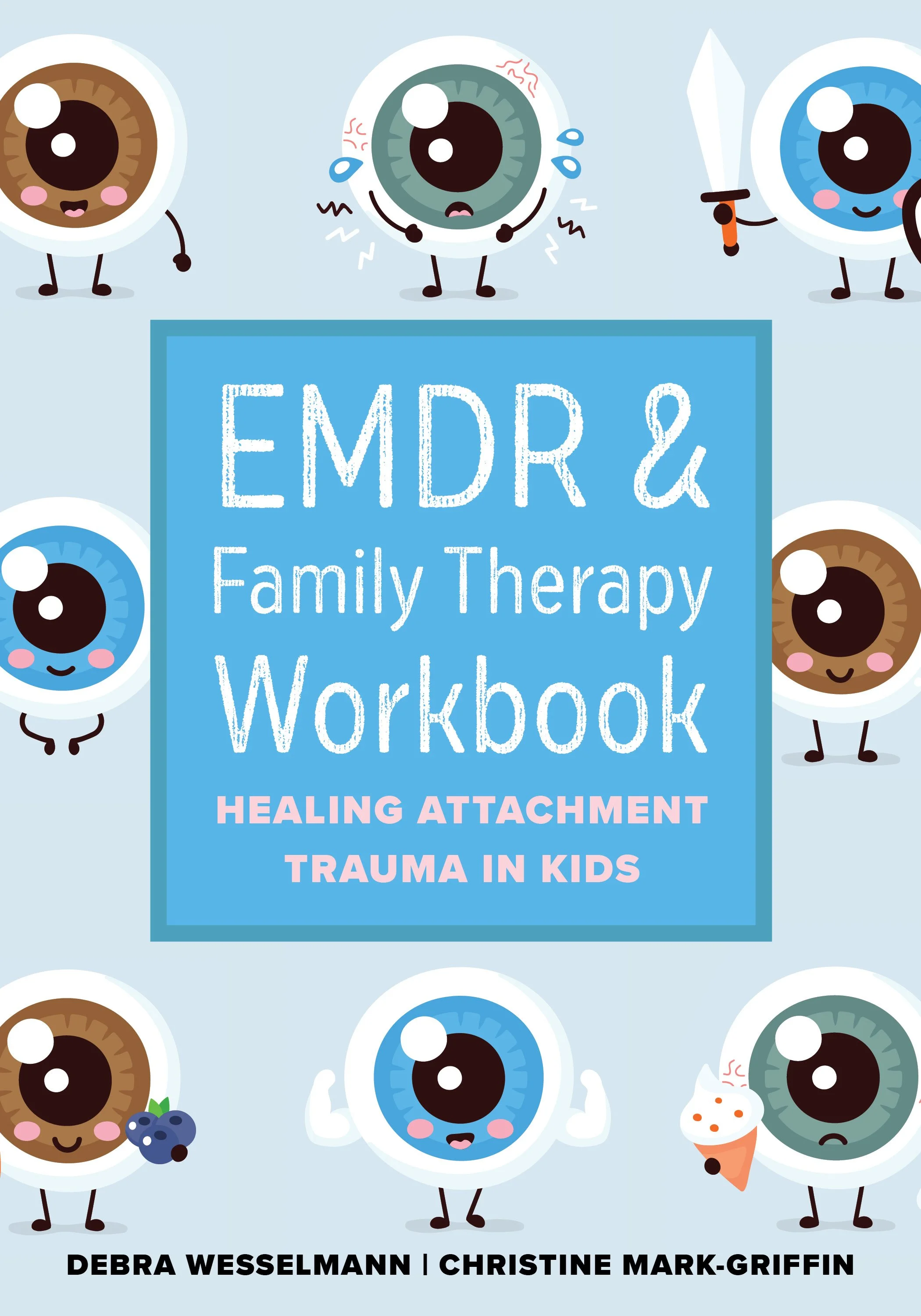
Christine Mark-Griffin, LCSW, RPT, RYT is an internationally acclaimed expert in EMDR therapy for children and the author of the award-winning EMDR Workbook for Kids. Christine is passionate about playfully combining her love of yoga, music, movement & fitness with clinical practice to help others learn, grow and healShe is the owner of Spark All Wellness, a private group practice with locations in SF & Pasadena, California specializing in EMDR, play therapy and trauma-informed yoga therapy with women and children. She is also the founder of EMDR for Kids. The mission at EMDR for Kids is to empower therapists, parents, and children of all ages with resources, tools, and advanced training to overcome trauma & adversities.
She is a sought after trainer in the field of psychotherapy and has trained thousands of clinicians internationally on integrating EMDR, play therapy and yoga in clinical practice.
Christine’s professional experience has included working in non-profit, child welfare, juvenile justice, community mental health, school-based mental health and higher education settings. Working in these various settings over the years has deepened her knowledge and understanding of complex trauma but has also exposed her to some of the most beautiful stories of healing and resilience.
Christine lives in San Francisco with her partner and two kids. The things that make her happiest include her family and friends, a good cup of coffee, baked goods, yoga, traveling, cycling, music & dancing.
-
Participants are required to attend the training in full, to receive CEs and EMDRIA credits.
-
100% refund by January 28th.
50% refund or credit towards a future training by February 5th.
Any cancellations after February 5th will be a credit towards a future training.
QUESTIONS
Contact Angi at angi.decapp@gmail.com
-
Schedule is in Central Standard Time (CST
9:00-10:15
Diving into problematic attachment patterns between parents and children
Q & A
10:15-10:30 BREAK
10:30-12:00
The basics of the integrative family therapy and EMDR therapy approach
Stage One Parent Psychoeducation and Case Conceptualization
Q & A
12:00-1:00 LUNCH
1:00-2:30
Stage Two Family Therapy Activities
Q & A
2:30-2:45 BREAK
2:45-4:00
Foundational EMDR resourcing activities
Attachment Resource Development (ARD) Activities
Self-regulation Development and Installation (S-RDI)
4-4:30
Q&A
-
Schedule is in Central Standard Time (CST)
9:00-10:15
Moving into Phase 3 Family Therapy and EMDR Trigger Tolerance Protocol
Transitioning into Timeline and Therapeutic Story
10:15-10:30 BREAK
10:30-12:00
The Timeline and Therapeutic Stories
12:00-1:00 LUNCH
1:00-2:30
Trauma work
Keeping parents present
Beginning EMDR phases 3-8 with support and safety, piecework, interactive interweaves
2:30-2:45 BREAK
2:45-4:00
Strategies and parent work to reduce dissociative symptoms in kids
Modifications to improve outcomes treating trauma for kids with neurodivergence and prenatal substance exposure
4:00-4:30
Q&A
Virtual Training
April 8-9, 2027
Zoom Online
Attachment-Based EMDR Therapy with Kids and Families: The Integrative Attachment Trauma Protocol for Children and Adolescents (IATP-C)
Mistrust of adults, behavioral challenges, dissociation, avoidance, and developmental deficits can present obstacles to effective treatment in the therapy office. This presentation provides instruction in the steps of the EMDR Integrative Attachment Trauma Protocol for Children (IATP-C). A case series study here and in the Netherlands as well as single case studies here and in New Zealand have shown promising results for the IATP-C approach.Participants will gain EMDR and family therapy skills for improving attachment security between parents and kids as well as making sense of the most difficult histories through therapeutic stories. Participants will gain skills for providing parent interactional interweaves, the art of EMDR “piecework,” and how to engage parents for stabilizing dissociation. Additionally, participants will be provided EMDR modifications that safely assist children and teens who are highly dissociative, neurodivergent, or impacted by prenatal substance exposure through trauma treatment.
The presentation incorporates discussion, videos, and practicum experiences that will allow you to become comfortable with applying these effective interventions
The Objectives
Participants will leave the training prepared to:
Summarize the obstacles to recovery from trauma encountered in the treatment of children affected by attachment trauma.
Describe 3 stages of the EMDR and family therapy integrative model for treating children with externalizing and internalizing symptoms related to attachment trauma.
Describe the importance of play and a playful demeanor to minimize defenses and engage children and their caregivers during the preparation and stabilization phase of treatment for attachment trauma.
Describe steps for EMDR resource development with children/teens to enhance capacity to access positive affect regarding self and relationship with caregivers.
Explain the adaptive information processing theory in layman’s language that can be used to help parents recognize their child’s dysregulation and mistrust as driven by early traumatic experiences.
Develop a therapeutic story that can provide needed adaptive information regarding difficult early experiences prior to reprocessing of individual traumatic events.
Explain ways in which traumatized children with brain differences due to a history of prenatal substance exposure or neurodivergence can be appropriately supported and assisted by the therapist and parent throughout the therapeutic process.
Summarize signs and symptoms of dissociation in children/teens pointing to the need for additional preparation phase strategies.
The Instructors
Debra Wesselmann, MS, LIMHP
Christine Mark-Griffin, LCSW, RPT, RYT
Pricing
$285** to Repeat
$360 by January 29th
$385 after January 29th
**The repeat pricing only applies if you have taken the EMDR Kids & Family Training previouslywith the ATC Institute (Armstrong, Schweitzer, Wesselmann)
PLEASE NOTE:
Basic EMDR Training is required to register for this training event.
Location
This is a Virtual Training over Zoom.
CE’s & Credits
12 EMDRIA Credits
Approval #01007-93
12 Licensure CEs
Additional Details
-
Debra Wesselmann, MS, LIMHP
Debra is the author of the newly released IATP-C clinician guide, EMDR and Family Therapy: Integrative Treatment for Attachment Trauma in Children and the soon-to-be released Attachment Trauma in Kids: Integrative Strategies for Parents. She is a co-founder of The Attachment and Trauma Center of Nebraska and has specialized in treating attachment trauma for 35 years. Debra is an EMDR trainer with the EMDR Institute and is on the editorial board for The Journal of EMDR Practice and Research. She conducts research and has authored and co-authored multiple books, articles and chapters, including two chapters co-authored with EMDR founder Francine Shapiro, Ph.D. As a recognized expert in attachment issues, Debra presents nationally and internationally.
Christine Mark-Griffin, LCSW, RPT, RYT
Christine Mark-Griffin, LCSW, RPT, RYT is an internationally acclaimed expert in EMDR therapy for children and the author of the award-winning EMDR Workbook for Kids. Christine is passionate about playfully combining her love of yoga, music, movement & fitness with clinical practice to help others learn, grow and healShe is the owner of Spark All Wellness, a private group practice with locations in SF & Pasadena, California specializing in EMDR, play therapy and trauma-informedyoga therapy with women and children. She is also the founder of EMDR for Kids. The mission at EMDR for Kids is to empower therapists, parents, and children of all ages with resources, tools, and advanced training to overcome trauma & adversities.
She is a sought after trainer in the field of psychotherapy and has trained thousands of clinicians internationally on integrating EMDR, play therapy and yoga in clinical practice.
Christine’s professional experience has included working in non-profit, child welfare, juvenile justice, community mental health, school-based mental health and higher education settings. Working in these various settings over the years has deepened her knowledge and understanding of complex trauma but has also exposed her to some of the most beautiful stories of healing and resilience.
Christine lives in San Francisco with her partner and two kids. The things that make her happiest include her family and friends, a good cup of coffee, baked goods, yoga, traveling, cycling, music & dancing.
-
Participants are required to attend the training in full, to receive CEs and EMDRIA credits.
-
100% refund by March 25th.
50% refund or credit towards a future training by April 3rd.
Any cancellations after April 3rd will be a credit towards a future training.
QUESTIONS
Contact Angi at angi.decapp@gmail.com
-
Schedule is in Central Standard Time (CST
9:00-10:15
Diving into problematic attachment patterns between parents and children
Q & A
10:15-10:30 BREAK
10:30-12:00
The basics of the integrative family therapy and EMDR therapy approach
Stage One Parent Psychoeducation and Case Conceptualization
Q & A
12:00-1:00 LUNCH
1:00-2:30
Stage Two Family Therapy Activities
Q & A
2:30-2:45 BREAK
2:45-4:00
Foundational EMDR resourcing activities
Attachment Resource Development (ARD) Activities
Self-regulation Development and Installation (S-RDI)
4-4:30
Q&A
-
Schedule is in Central Standard Time (CST)
9:00-10:15
Moving into Phase 3 Family Therapy and EMDR Trigger Tolerance Protocol
Transitioning into Timeline and Therapeutic Story
10:15-10:30 BREAK
10:30-12:00
The Timeline and Therapeutic Stories
12:00-1:00 LUNCH
1:00-2:30
Trauma work
Keeping parents present
Beginning EMDR phases 3-8 with support and safety, piecework, interactive interweaves
2:30-2:45 BREAK
2:45-4:00
Strategies and parent work to reduce dissociative symptoms in kids
Modifications to improve outcomes treating trauma for kids with neurodivergence and prenatal substance exposure
4:00-4:30
Q&A
CE-Classes.com is approved by:
The American Psychological Association (APA) CE-classes.com is approved by the American Psychological Association to sponsor continuing education for psychologists. CE-classes.com maintains responsibility for this program and its content.
California Board of Behavioral Sciences. The California Board of Behavioral Sciences, BBS, recognizes relevant course work/training that has been approved by nationally recognized certifying bodies, such as APA, to satisfy renewal requirements.
California Consortium of Addiction Programs and Professionals (CCAPP) Provider Number OS-12-174-0627 Expires 06-2027
California Board of Registered Nursing. CEP 15647 Expires 11/30/2026.
Florida Board of Clinical Social Work, Marriage and Family Therapy and Mental Health Counseling Provider #852 BAP-Expires 3/31/2027
Florida Board of Nursing (CE Provider #: 50-4896) Expires 10/31/2028 Do not send certificates to the Florida Board of Nursing. You must keep this certificate for 4 years.
Illinois - CE-Classes.com is a registered social work CE sponsor by the State of Illinois. License 159.001607 Expires 11/30/2027
Massachusetts Authorization Number: (TBD)
New York Mental Health Practitioners Board CE-Classes.com, Inc. is recognized by the New York State Education Department’s State Board for Mental Health Practitioners as an approved provider of continuing education for licensed mental health counselors. #MHC-0260
New York Psychology Board CE-Classes.com, Inc. is recognized by the New York State Education Department’s State Board for Psychology as an approved provider of continuing education for licensed psychologists #PSY-0211
New York Social Work Board – CE-Classes.com is recognized by the New York State Education Department’s State Board for Social Work as an approved provider of continuing education for licensed social workers #SW-0120.
Ohio Counselor, Social Worker and Marriage and Family Therapist Board - Approval from a state licensing board for counselors, social workers, marriage and family therapists is accepted by the OH CSWMFTB.
Oklahoma Board of Behavioral Health Licensure (LPCs, LMFTs and LBCs)
South Carolina - CE-Classes.com is approved by the S.C. Board of Examiners for Licensure of Professional Counselors, Marriage & Family Therapist, Addiction Counselors, and Psycho-Educational Specialists (#4696).
Texas Board of Social Work Examiners – CE-Classes.com meets the requirements for acceptable continuing education. Effective 1/1/24, at least half of the 30 hours must be obtained from a provider listed in 801.261(f). This course meets that requirement.
Texas Board of Professional Counselors – CE-Classes.com meets the requirements for acceptable continuing education. Effective 1/1/24, at least half of the 30 hours must be obtained from a provider listed in 801.261(f). This course meets that requirement.
Texas Board of Marriage & Family Therapists – CE-Classes.com meets the requirements for acceptable continuing education. Effective 1/1/24, at least half of the 30 hours must be obtained from a provider listed in 801.261(f). This course meets that requirement.
This course is NOT available for NBCC credit
This course does not offer ASWB ACE credit to social workers. However our state board approvals may be accepted for license renewal. Check with your state board.
Intended Audience – Psychologists, Counselors, Social Workers, etc.
Skill level – Beginner, Intermediate, Advanced
Grievances -All grievances must be in writing to angi.decapp@gmail.com and will be replied to within 5 - 10 business days.
ADA assistance - This workshop is held in facilities which are in compliance with the Americans Disabilities Act. Please contact debwess@gmail.com if special accommodation is required.
CE-Classes.com is the provider of (CEs).
Certificates are awarded online after completion of the workshop. Participants print their own certificate after registering at CE-Classes.com, entering a keycode, and completing an evaluation form.
Licensed Professionals should contact their regulatory board to determine course approval.
There are no known conflicts of interests for this workshop